Tuttle Twins American History: Volumes 1 & 2
The short version first:
An engaging, story-driven introduction to American history in chapter-book form.
Very accessible for elementary readers.
Presents history through a strong and noticeable ideological lens.
Works best as a discussion-based supplement, not a standalone curriculum.
Can be a powerful tool for teaching kids how bias shows up in books and media.
Opens the door to meaningful conversations about perspective and critical thinking.
We didn’t set out looking for Tuttle Twins American History. The only reason these books landed in our homeschool in the first place is because we thrifted a few of the Tuttle Twins economics titles - and genuinely liked them. They introduced complex economic ideas in a surprisingly approachable, kid-friendly way, and for that purpose, they worked well.
So when we came across the American History volumes, it felt like a natural next step.
What we didn’t expect was how much more strongly the ideological bias would show through in the history books - enough that it shifted how we used them entirely.
What Is Tuttle Twins American History?
Tuttle Twins American History Volumes 1 & 2 are part of the broader Tuttle Twins series, which presents social studies topics through a clearly libertarian-leaning perspective. The history books follow the Tuttle Twins characters as they travel through time, interacting with historical figures and major events.
The content is delivered in a fast-paced, narrative chapter-book format, making it very accessible for elementary students. Kids who enjoy stories over textbooks will likely stay engaged.
What the Books Cover
Across both volumes, the books touch on major moments in early American history, including colonial America, the American Revolution, the Founding Fathers, the Constitution, and early government formation.
However, this is not a comprehensive or neutral sweep of American history. Events are selected and framed in ways that support the authors’ broader ideological themes, often simplifying complex issues or presenting them with little nuance.
That doesn’t make the books unusable - but it does mean they require intention.
How We Used Them in Our Homeschool
We quickly realized these books worked best not as a primary history source, but as a conversation starter.
Our approach looked something like this:
Read a chapter together or independently
Pause often to clarify historical context
Ask questions about perspective and language
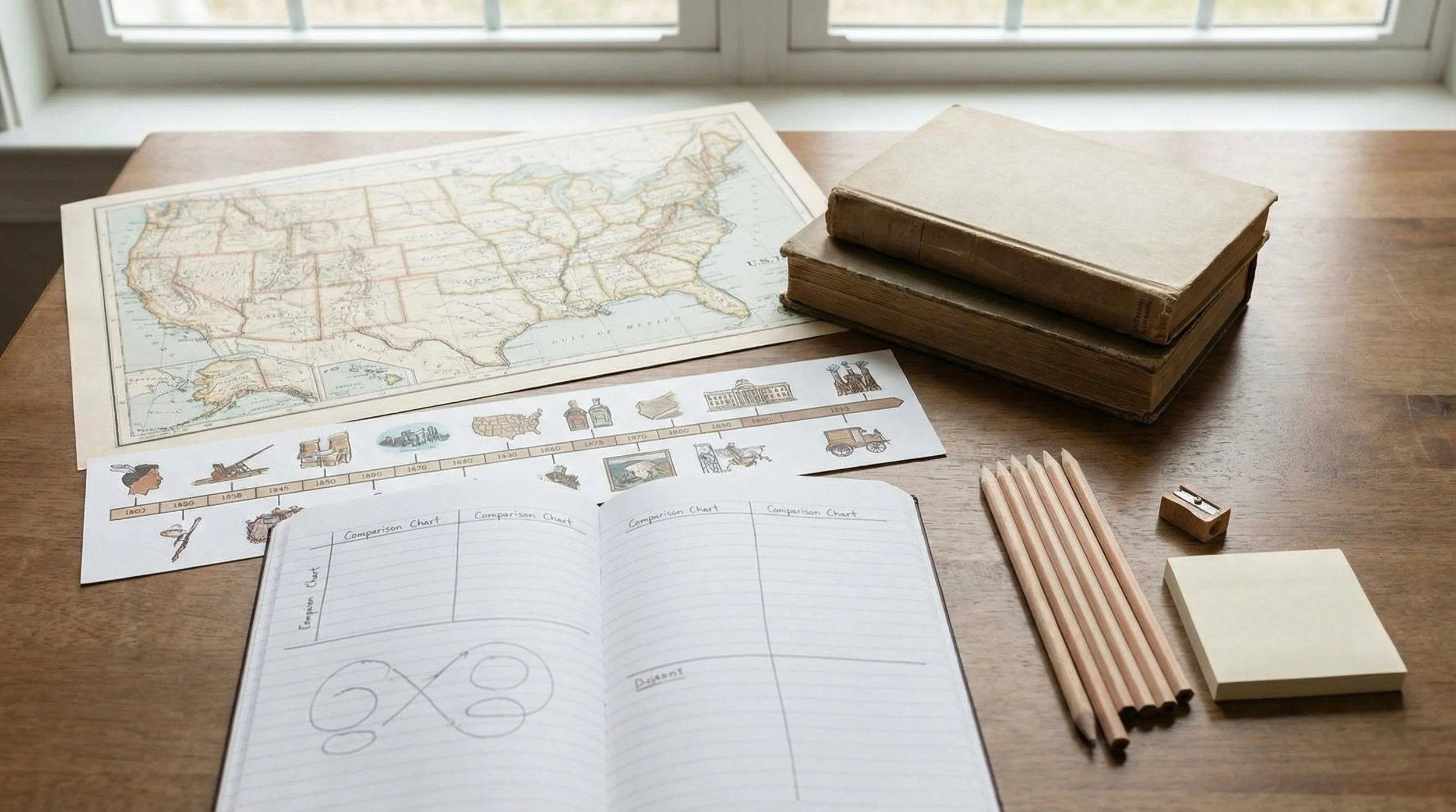
Compare the same event using a more neutral history resource
Discuss what felt emphasized - and what felt missing
Rather than glossing over the bias, we named it directly. We talked about what bias is, why authors write from certain viewpoints, and how even curriculum carries perspective.
That shift changed everything.
Strengths Worth Acknowledging
The books are engaging. Kids want to keep reading. The language is accessible, and the story format makes big ideas feel less intimidating. They also spark curiosity about government, economics, and American history—no small thing.
Used intentionally, they encourage kids to ask questions instead of passively absorbing information.
Where Caution Is Needed
The bias is strong and consistent. Historical complexity is often reduced, and alternative viewpoints are rarely explored. If taken at face value, the books can present opinion as fact.
For families looking for a neutral or academically balanced history curriculum, this will likely feel distracting.
Who This Curriculum Is Best For
Tuttle Twins American History works best for:
Families comfortable with guided discussion
Students ready to talk about perspective and interpretation
Homeschools using multiple history resources
Parents who want to explicitly teach critical reading skills
Kids who enjoy chapter-book learning
It’s not a great fit as a standalone history program - but as a supplement, it can be valuable.
Final Thoughts
Tuttle Twins American History Volumes 1 & 2 are not neutral - and they don’t pretend to be. While the bias became a sticking point for us, it also turned into one of the most useful teaching moments in our homeschool.
By pairing these books with more balanced resources and openly discussing perspective, we were able to turn bias itself into the lesson. And in a world full of information, that skill - learning how to question what you read - might be one of the most important ones we can teach.
FAQs from This Blog Post
Q: Is this a full American history curriculum?
A: No. It works best as a supplement.
Q: What age is this best for?
A: Upper elementary students who can engage in discussion.
Q: Is it neutral?
A: No. It presents a clear ideological perspective.
Q: Can bias be educational?
A: Yes…when it’s named and discussed openly.
Q: Would you use it again?
A: Yes, as a discussion tool paired with more balanced resources.