Singapore Math Dimensions Grade 5
The short version first:
Challenging but approachable. Builds real understanding instead of memorization.
Strong problem-solving focus. Emphasizes bar modeling, mental math, and multi-step reasoning.
Balanced and thorough. Conceptual understanding and skill practice work hand in hand.
Concrete to abstract learning. Concepts are introduced visually and gradually move to equations.
Parent-friendly. Clear teaching notes make it manageable even if math isn’t your favorite subject.
Excellent prep for what’s next. Sets students up well for Pre-Algebra and middle school math.
Upper elementary math is a turning point. This is where students move beyond basic operations and start juggling fractions, decimals, volume, graphing, and more complex word problems - often all at once.
If you’re looking for a curriculum that doesn’t just cover those topics but actually helps kids understand them, Singapore Math Grade 5 is a standout option.
Rather than rushing through material, it slows things down just enough to make sure concepts stick. That depth is what gives students confidence as math starts to feel more demanding.
What Makes Singapore Math Different
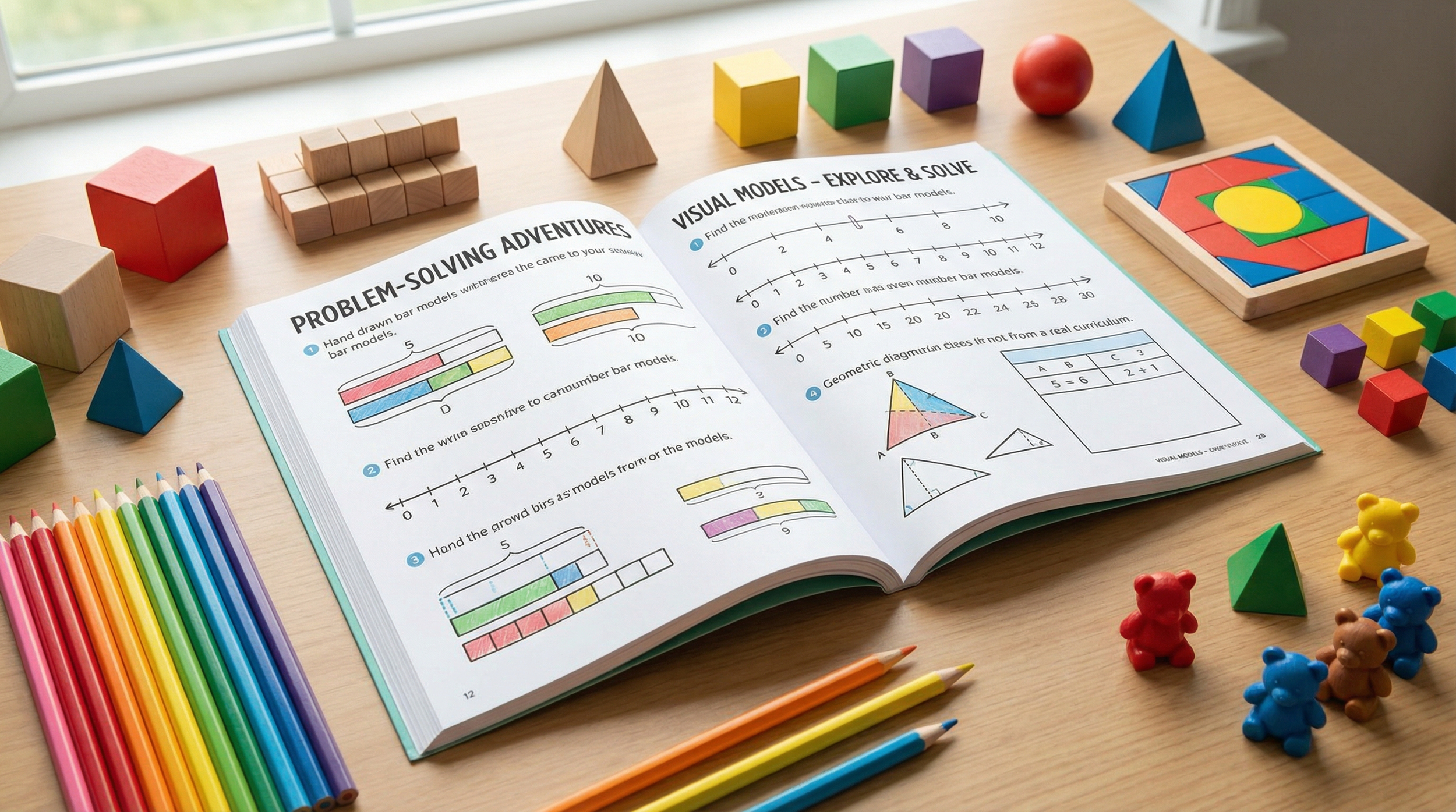
Singapore Math is built around understanding why math works, not just how to follow steps. The backbone of the program is the Concrete → Pictorial → Abstract approach.
Students start by modeling problems with hands-on tools, move into visual representations like bar models and diagrams, and only then transition to equations and algorithms. This progression is especially helpful in Grade 5, when abstract thinking ramps up quickly.
Bar modeling, in particular, becomes a powerful problem-solving tool. It gives students a way to visualize relationships in word problems instead of guessing which operation to use.
What’s Covered in Grade 5
Grade 5 goes deep - but in a thoughtful way. Topics typically include multi-digit multiplication and division, advanced fraction operations, mixed numbers, decimals, introductory percentages, area and volume, graph interpretation, geometry concepts, and early work with rates and ratios.
Instead of skimming, Singapore Math spends time helping students really own each concept. That depth pays off later, especially as students approach pre-algebra.
The core materials usually include a textbook, workbook, and a Home Instructor’s Guide, with optional extras for students who want more challenge or practice.
How Lessons Flow
Lessons follow a consistent rhythm, which helps students feel grounded even when the math gets harder.
A typical lesson starts with a real-world problem or discussion prompt. From there, students work through guided examples before completing independent practice in the workbook. Concepts are reviewed regularly so skills don’t fade as new ones are introduced.
Most families spend about 30–45 minutes per lesson, depending on pacing and how much discussion or hands-on modeling you include.
The Home Instructor’s Guide is a huge help here. It walks you through strategies, explains the “why” behind solutions, and offers support if you’re teaching material that feels rusty.
Making It Even More Hands-On
Even at this level, hands-on learning still matters. Modeling fractions with food or paper strips, exploring volume with boxes and cubes, calculating real-life percentages from store ads, or graphing simple surveys all help reinforce abstract ideas.
These moments connect math to everyday life - and that’s when things really start to click.
Why Singapore Math Grade 5 Works
Singapore Math Grade 5 challenges students without overwhelming them. It builds strong problem-solving habits, encourages logical thinking, and helps kids feel capable as math becomes more complex.
If your goal is to prepare your child for middle school math with confidence, not stress, this curriculum does a great job of laying that groundwork.
FAQs from This Blog Post
Q: Is Singapore Math Grade 5 very challenging?
A: It’s rigorous, but the pacing and visual approach make it accessible for most students.
Q: Do I need to be good at math to teach this?
A: No. The Home Instructor’s Guide explains strategies clearly and supports parents step by step.
Q: How long are daily lessons?
A: Most families spend 30–45 minutes per day.
Q: Does this prepare students for Pre-Algebra?
A: Yes. The focus on fractions, ratios, and multi-step problem solving makes it excellent preparation.
Q: Is this a good fit for homeschoolers?
A: Absolutely. The structure, flexibility, and clear explanations make it especially homeschool-friendly.